
Case Study
Building Confidence and Safety for Aotearoa’s Commercial Cleaners
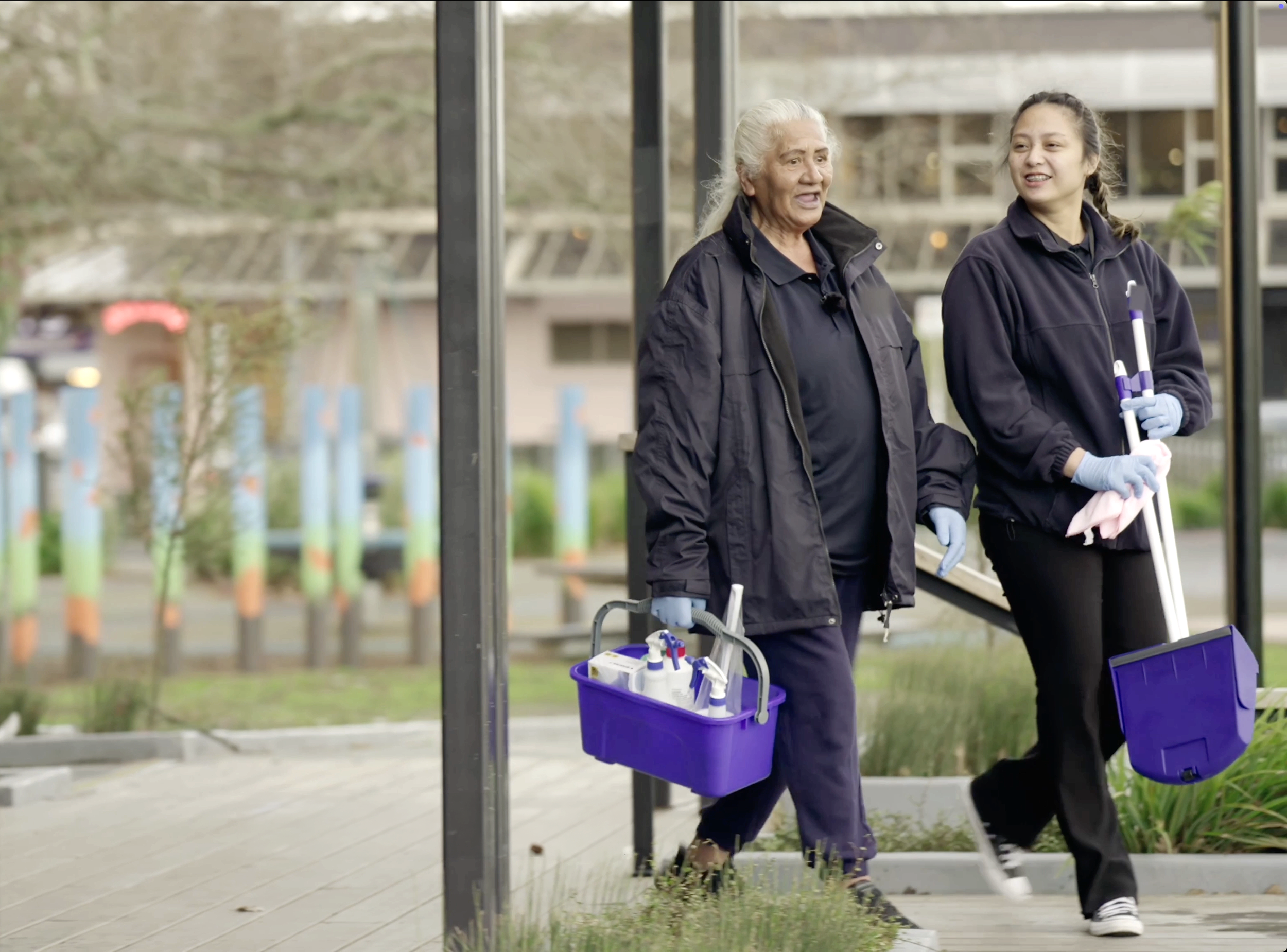
Commercial cleaners are one of Aotearoa New Zealand’s largest frontline workforces, more than 42,000 people who keep workplaces, public spaces and essential services running every day. Many work alone, at night, or in unpredictable environments. Until recently, few sector‑wide tools existed to help cleaners navigate challenging situations safely and confidently.
With support from the Workforce Futures Fund | Tahua Rāngamahi Anamata (WFF), Building Service Contractors of New Zealand (BSCNZ) set out to change that. What began as a plan for six short training videos grew into a much more ambitious initiative: 11 multilingual de‑escalation learning modules designed by the industry, for the industry.
“This project shows the power of industry‑led innovation to lift capability and create safer, more confident workplaces. It’s a clear example of how targeted investment can shift outcomes for Aotearoa’s frontline workforces.”
Industry‑led design grounded in real experience
The project was shaped through deep collaboration across the cleaning sector. Members of the BSCNZ Cultural and Training Advisory Committee (CTAC) representing companies that usually compete, worked alongside de‑escalation specialists to co‑design scenarios, review scripts and ensure cultural integrity.
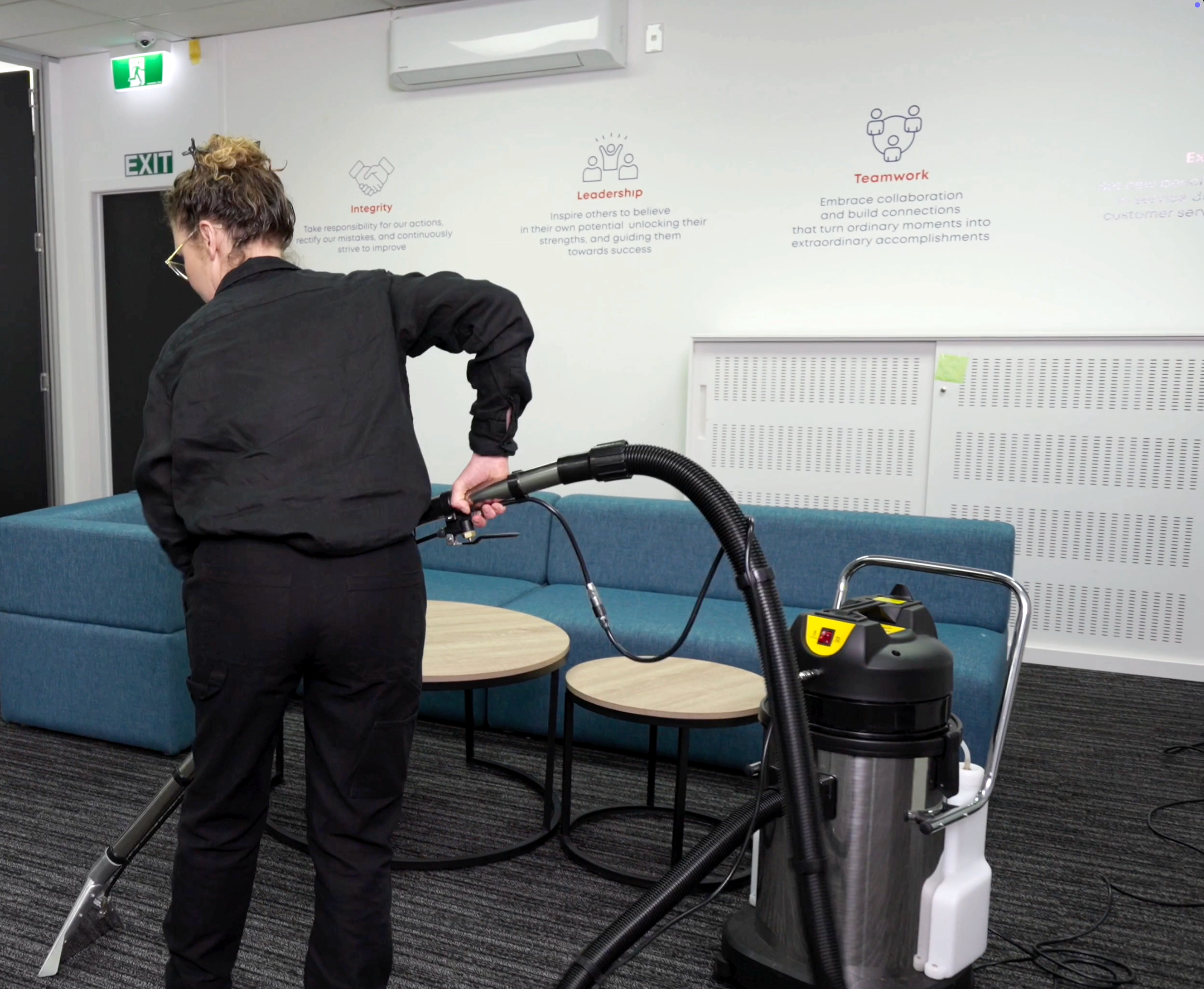
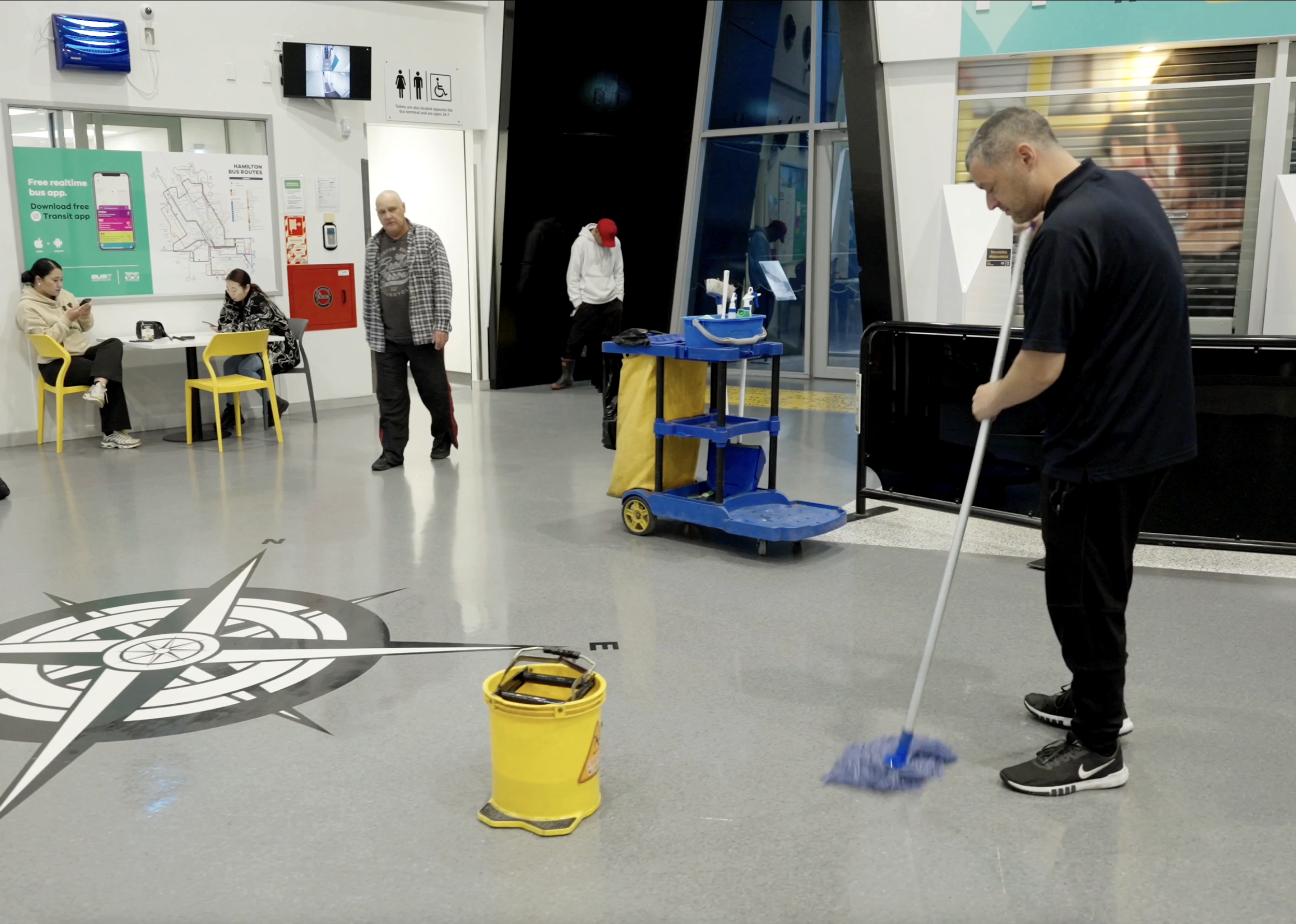
Cleaners and supervisors volunteered to appear in the videos, and contractor’s customers opened their worksites for filming. This collective effort produced training that feels authentic, practical and immediately recognisable to the workforce, an important factor behind the strong early uptake.
Reaching a diverse, multilingual workforce
The cleaning workforce is one of the most culturally diverse in Aotearoa. To ensure every cleaner could access the training, BSCNZ translated the modules into 10 languages.
AI translation tools were trialled but proved inaccurate and culturally inappropriate for sensitive safety content. BSCNZ shifted to professional translation and community review—an important insight for any sector working across multiple languages.
The final modules are free, mobile‑friendly and accessible across devices, making them easy to integrate into induction, toolbox talks and ongoing refresher training.

Strong early uptake and growing sector reach
The training launched on 8 December 2025 with strong momentum. Within 24 hours, 14 BSCNZ member organisations and 7 non‑members had registered to roll out the modules. Early usage data shows rapid engagement, and the training has already been shared across Ringa Hora and the newly formed ISB representing health and community, E tū, Careerforce and wider industry networks.
BSCNZ is now preparing to extend the training into adjacent sectors. Outreach to hospital and healthcare cleaning teams, aged care providers and hospitality networks is underway, and discussions with Careerforce signal potential integration into NZQA Level 2 and 3 cleaning qualifications. This positions the initiative for long‑term, sector‑wide impact.
“These modules have exceeded our expectations. We’re already seeing how accessible, culturally grounded training can lift confidence and safety for cleaners across Aotearoa. This initiative is also a powerful example of BSCNZ members’ commitment to raising industry standards — coming together, collaborating, and investing in tools that strengthen the capability and wellbeing of our frontline workforce.”
How this strengthens the workforce
For cleaners, the modules offer practical strategies to stay safe, manage challenging behaviour and build confidence in their roles. The short, mobile‑friendly format fits naturally around shift work, and the multilingual design ensures workers can learn in the language they understand best. Together, these features support safer working environments, stronger wellbeing and more consistent training across the sector.
For employers, the modules provide a high‑quality, ready‑to‑use resource that can be embedded into induction, ongoing training and HR systems strengthening workforce capability and reducing risk.
Key learnings for the sector
This project offers several key learnings for the wider sector, highlighting what supports effective workforce tools and where thoughtful design choices can create lasting, system‑level impact.
Co‑design strengthens impact. Bringing together technical experts, frontline workers and cultural advisors ensured the content was trusted and grounded in real experience.
Multilingual content needs human oversight. AI translation tools can be helpful, but culturally sensitive material requires professional review.
Short, accessible learning drives engagement. Mobile‑friendly modules fit naturally into shift‑based work and support rapid uptake.
Strategic investment unlocks wider value. The modules are now being considered for use across adjacent sectors, showing how a targeted project can create system‑level benefits.
Supplier due diligence matters. Careful vetting of production and hosting partners ensured quality and avoided downstream issues.
Forecasting requires flexibility. Volunteer contributions and fluctuating costs can shift project budgets; strong relationships helped keep this project under budget without compromising quality.
A foundation for future workforce development
This initiative shows what’s possible when industry leadership, cultural insight and practical design come together. It demonstrates the value of investing in tools that strengthen safety, capability and confidence for frontline workers and highlights the potential for scalable, sector‑wide solutions.
For the wider sector, BSCNZ’s experience illustrates how thoughtful design, collaboration and inclusive practice can turn a good idea into a resource that lifts an entire workforce.
"I just wanted to take a moment to let you know that I’ve completed the training, De-escalation Learning for Commercial Cleaners, and I felt compelled to share how impressed I was. It was not only exceptionally well put together, but also incredibly relevant and timely. The scenarios and guidance were practical, thoughtful, and clearly designed with real-world challenges in mind.
I’m genuinely grateful for the effort and care that went into developing this training. In a world that feels increasingly complex and, at times, unpredictable, providing our teams with the skills and confidence to navigate difficult situations safely is invaluable. This kind of learning doesn’t just tick a compliance box — it embeds itself in the subconscious, equipping staff to respond calmly and professionally when it truly matters.
I’m very much looking forward to rolling this out to all of my staff during our upcoming toolbox meetings. I have no doubt it will spark meaningful conversations and strengthen both their confidence and capability on the ground.
Thank you again for delivering something so practical, empowering, and genuinely valuable. It’s greatly appreciated.”